Loading this country
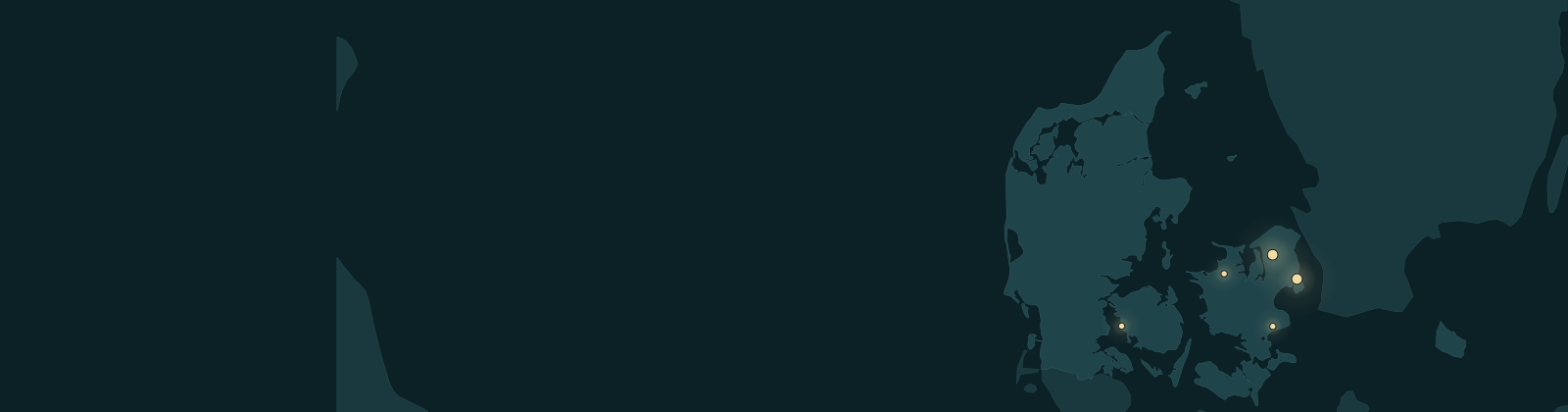 Copenhagen145 beersFaxe1 beer
Danish beer
203 beers from 6 towns
Modern lager leans on a Copenhagen discovery: in 1883 Emil Christian Hansen, at the Carlsberg laboratory, isolated a pure yeast, and by Carlsberg's account J.C. Jacobsen gave it free to other brewers. At home pale lager still dominates, with Carlsberg and Tuborg merged since 1970. The fixed point of the beer calendar is J-dag, the first Friday of November, when Tuborg's Christmas brew goes on tap. Copenhagen's Mikkeller, founded in 2006, began without a brewery of its own.
Where to start
Beer Geek Breakfast
Oatmeal stout brewed with coffee, by a brewery that for years owned no brewery.
Carlsberg Pilsner
The Carlsberg Laboratory isolated the first pure lager yeast strain in 1883 and gave it away rather than patenting it.
Grøn Tuborg
Denmark's first pilsner, launched in 1880 and still the country's best selling beer, exported now to around seventy countries.
Jacobsen Saaz Blonde
Brewed at the original 1847 Carlsberg site in Copenhagen, kept as a small house after production moved out of the city.
To Øl Sur Mash
Founded by two former pupils of the teacher who started Mikkeller, which makes Danish brewing a slightly odd family tree.
X-mas beer
Royal Unibrew's Christmas lager, released each year on J-day, the evening Danish Christmas beer reaches the shops.
Beer in Denmark
Hvidtøl is the thread back to Danish farmhouse brewing. The brewers' association calls today's version, usually about 2% alcohol, the only beer comparable with what earlier generations made on their farms, though it survives mostly as nisseøl with rice porridge or in rye bread. In 1835 J.C. Jacobsen inherited a small hvidtøl brewery in Copenhagen, and in the 1840s he bet on Bavarian-style beer.
Tuborg brewed the first Danish pilsner, Grøn Tuborg, in 1880, and the type still made up 58.7% of the beer drunk in 2022. Gaining on it is Classic, first brewed in Denmark in 1993 as a revival of Vienna lager: sales rose from 66.1 million litres in 2020 to 80 million in 2022. Jacobsen Saaz Blonde looks elsewhere, brewed in the Belgian tradition and adapted, says Carlsberg Danmark, to Nordic taste.
Brewery numbers have swung sharply: 12 in 2000, a peak of 261 in 2022, then 207 in 2025. To Øl, the name on Sur Mash, began in a Copenhagen school kitchen, spent nine years producing at other breweries and in 2019 took over the former Beauvais factory in Svinninge. Of a record 219 Christmas beers counted in December 2025, 37 were India pale ales.
Sources: Bryggeriforeningen (Danish Brewers' Association): Mørk Lager, Bryggeriforeningen: Lys Lager, Bryggeriforeningen: Classic-øl i markant fremgang, Bryggeriforeningen: Øl, Bryggeriforeningen: Færre danske bryggerier, Bryggeriforeningen: Rekord i antal julebryg, Slots- og Kulturstyrelsen (Danish Agency for Culture and Palaces): Carlsberg, Carlsberg Danmark: Jacobsen Saaz Blonde, To Øl: Who We Are.
All 203 Danish beerspage 1 of 4
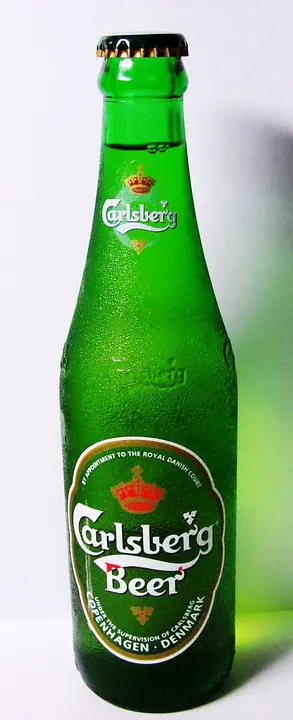
Carlsberg PilsnerPhoto: Hawyih, Public domain
Beer Geek Breakfast
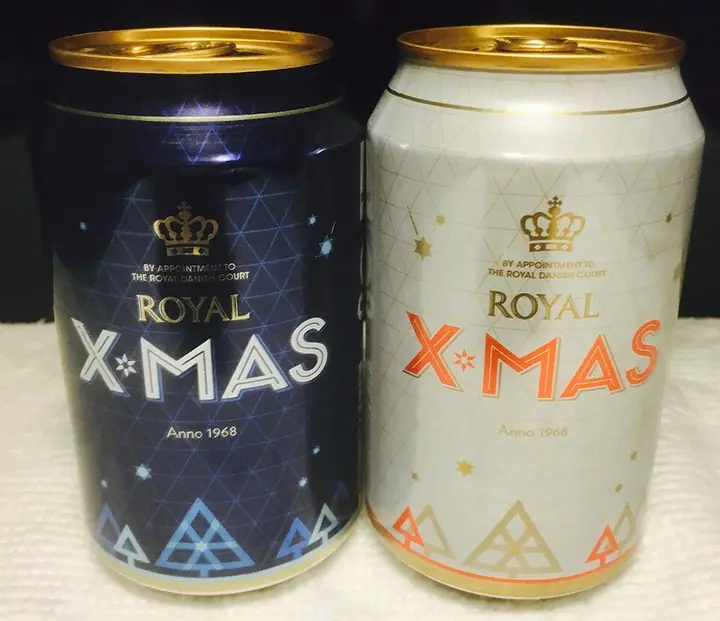
X-mas beerPhoto: Royal Export, CC BY-SA 4.0
To Øl Sur Mash
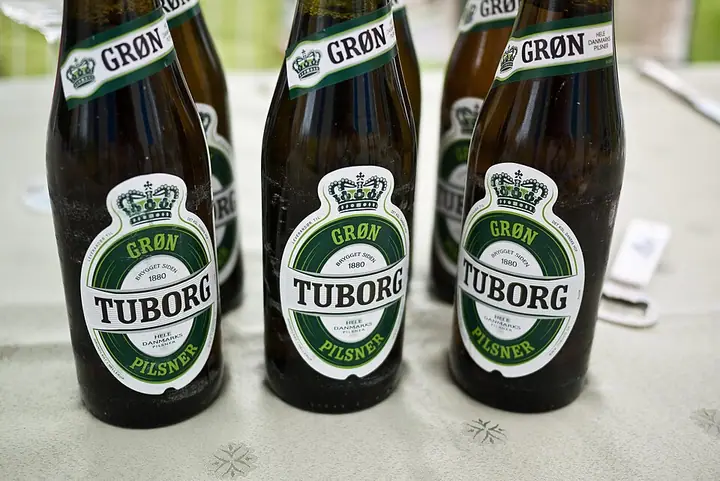
Grøn TuborgPhoto: Håkan Dahlström, CC BY 2.0
Jacobsen Saaz Blonde
19" Neck
47 Bryg
Ampersand: Idaho 7
Ampersand: Motueka
Ampersand: Strata
Ancient Paradox
Angle of Repose
Arcadian Orchard
Around the Bend
Astral Sabbatical
Bad Pun
Balancing Pact
Berries & Cream
Big Black Bicycle
Big Drunk Baby
Bob Hund Dansa Efter Min LakritspIPA
Bone Orchard
Booty Call
Brewmasters Collection American Pale Ale
Brewmasters Collection California Steam Beer
Brewmasters Collection India Pale Ale
Brewmasters Collection Irish Red Ale
Brewmasters Hoppy Alpen Weisse
Brown Owl
Cadillac Cut
Caps Lock
Carls Jul
Carls Special
Carlsberg 0.0% Lager Beer
Carlsberg 175 Years Anniversary Beer
Carlsberg 1883
Carlsberg 47
Carlsberg Export
Carlsberg Fanbryg
Carlsberg Lite
Carlsberg Non Alcoholic
Carlsberg Sort Guld / Black Gold
Carlsberg Unfiltered
Christian Bale Ale
Chromodome
Citra Bale Ale
Crosstown Kellerbier
Cry For Help, Rick
Dank & Juicy
Dogs Allowed
Don't Bring Me Down
Doom Sauce
Double Dippy Doo
Double Mads Hands
Dusty Punter
El Dorado
Elastic Ladder
Elephant
Elephant Extra Strong
Danish beer styles
- New England IPA37
- American IPA17
- Pilsner17
- American Pale Ale8
- Session India Pale Ale8
- Pale Lager7
- Sour beer5
- Imperial Stout4
- Porter4
- Black India Pale Ale3
- Gose3
- India Pale Ale3
- Lager3
- New England Pale Ale3
- Pale Ale3
- Vienna Lager3
- Ale2
- American barley wine2
- Coffee stout2
- Double IPA2
- Oatmeal Stout2
- Tripel2
- Wheat Beer2
- Witbier2
- Baltic Porter1
- Belgian Ale1
- Bock1
- Old Ale1
- Stout1
Breweries7 of 7
| Brewery | Town | Founded | Beers |
|---|---|---|---|
| Carlsberg Bryggerierne | Copenhagen | 3 | |
| Carlsberg Group | Copenhagen | 1847 | 2 |
| Mikkeller | Copenhagen | 2006 | 2 |
| Bryggeriet Vestfyen | Assens | 1885 | 1 |
| Jacobsen / Carlsberg | Copenhagen | 1847 | 1 |
| Royal Unibrew | Faxe | 1989 | 1 |
| To Øl | Svinninge | 2010 | 1 |
On the recordcounted from 203 beers
Strength
The median is 5.8% ABV. Half of them fall between 5.3% and 7.0%. Measured on 11 of the 203; the rest carry no strength.
- Strongest Beer Geek Breakfast7.5%
- Weakest To Øl Sur Mash4.5%
The record here
- Breweries7
- Towns6
- Styles29
- Brewing since1847
Oldest brewery with a sourced year: Carlsberg Group, 1847.
Oldest beer with a sourced year: Carlsberg Pilsner, 1904.
These are facts about this record, not about the world. The atlas is only as deep as its sources: 74% of everything it holds is American or Dutch, because that is what the bulk import reached. The styles most often recorded in Denmark are not necessarily the ones most often brewed there.
Explore the towns
Denmark6 towns
Towns as a table6
| Town | Beers |
|---|---|
| Copenhagen | 145 |
| Gørløse | 48 |
| Svinninge | 1 |
| Assens | 1 |
| Penryn | 1 |
| Faxe | 1 |